Campaign
Curbside Management
New York City’s curbs are one of our city’s greatest public resources. We need to leverage them to ensure they work for all New Yorkers and serve as a dynamic public space.
Right now, the curb is asked to fulfill several roles at once. It has to handle freight and food deliveries, trash collection, bus lanes, bike lanes, parking, outdoor dining, and more. But the vast majority of it is set aside for storing private vehicles, and the average car sits parked, unused, 94% of the time.
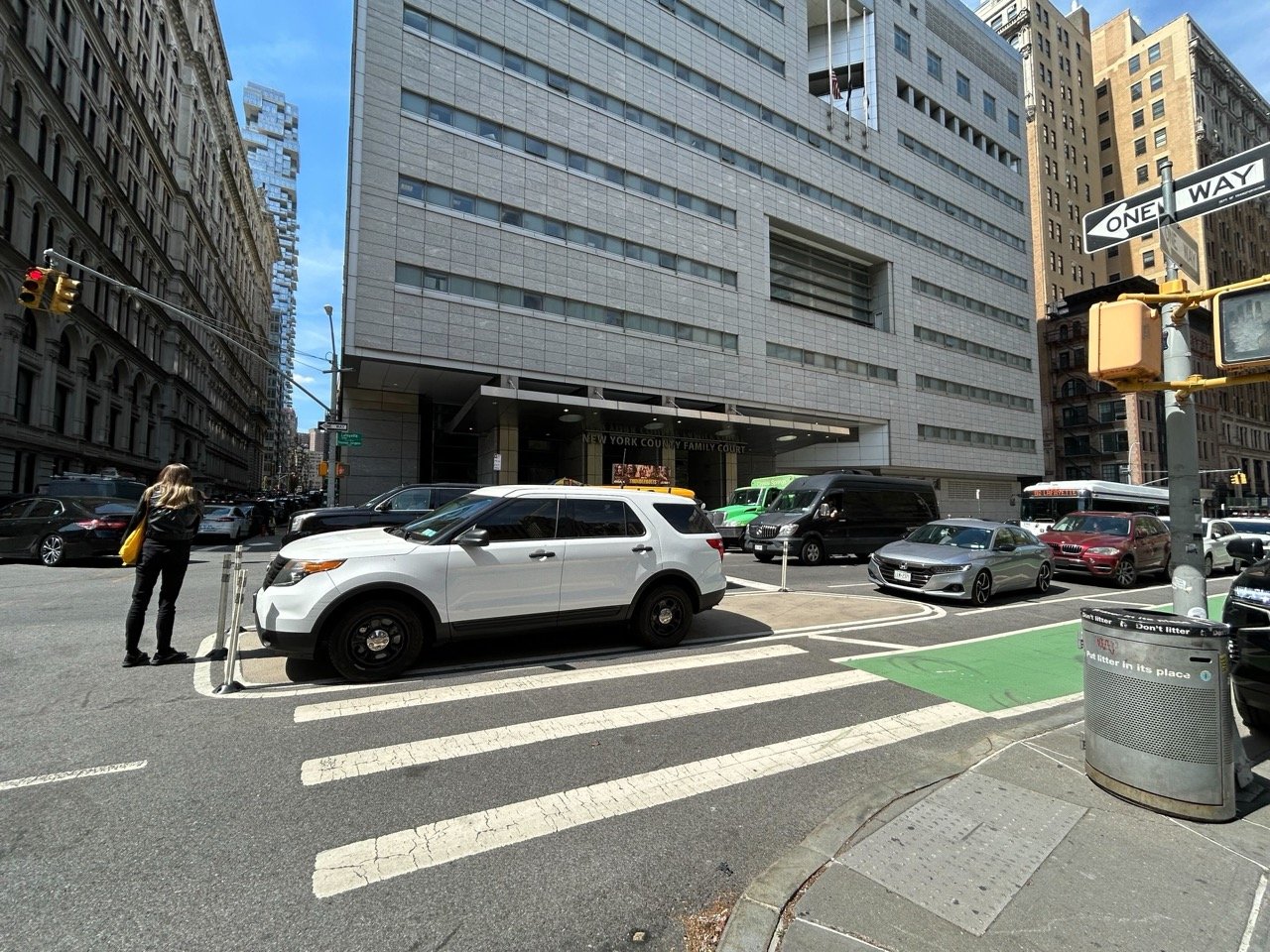
The result is chaos at the curb. Illegal and double parking is rampant, delivery trucks block bus and bike lanes, trash piles up on sidewalks, and cyclists hunt for somewhere to lock up. This isn’t how a 21st-century city should work.
Our Vision
Streets are public space, and that includes the curb.
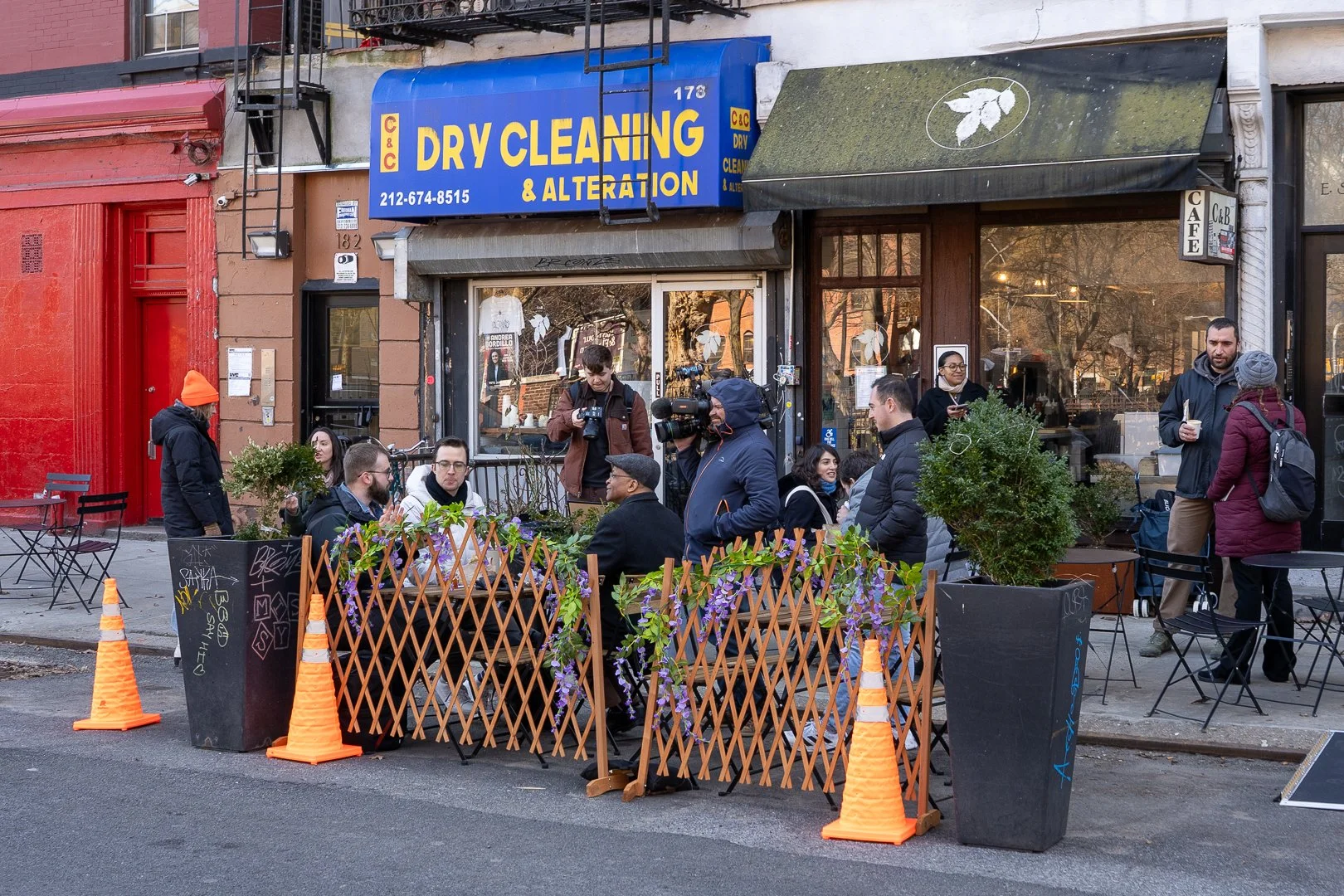
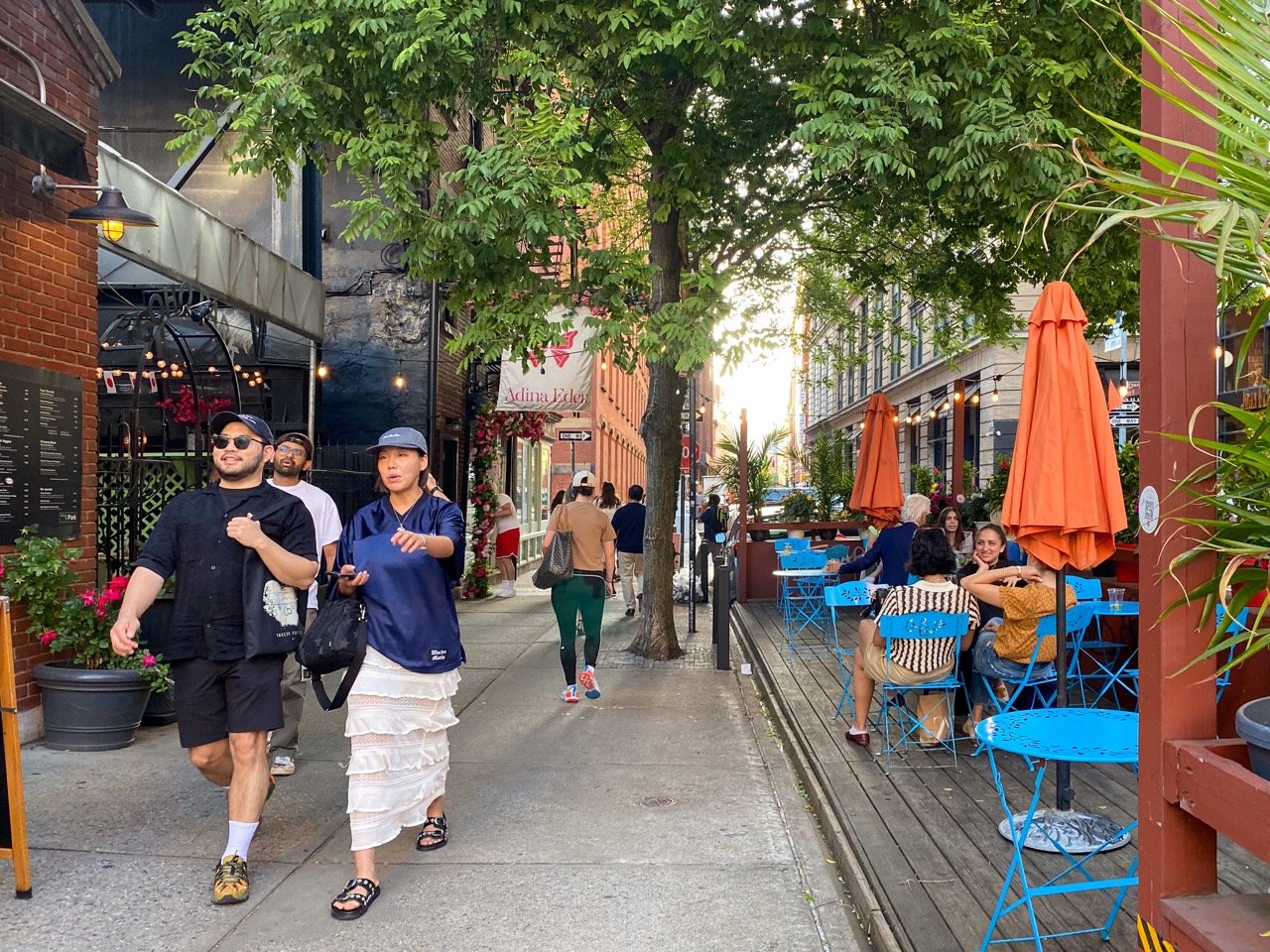
The City should actively manage our curbs, giving space to the uses that serve the most people and provide the most access. Some parking on some blocks makes sense. But so do neckdowns that keep pedestrians safe at intersections, loading zones that cut down on double parking (and honking and idling), bike corrals that fit ten bikes in the space of one car, trash containerization, car share spots, and parklets with benches and trees.
Our Research
We’ve been making the case for better curb management for years, and our research lays out how to get there.
In 2023, we published Curb the Chaos: Solutions for Cities at the Curb, a nationwide look at how cities like San Francisco, Seattle, and Omaha are making their curbs work for more people. Drawing on interviews with dozens of practitioners in other cities, curb users, and technology companies, we recommended that New York:
Treat the “parking lane” as a flexible “curb lane,” with a diverse mix of uses.
Create neighborhood-based curb management strategies that plan the curb as part of a citywide network.
Standardize and share curb data, so the City and the public can see how the curb is being used.
Launch automated curb enforcement citywide.
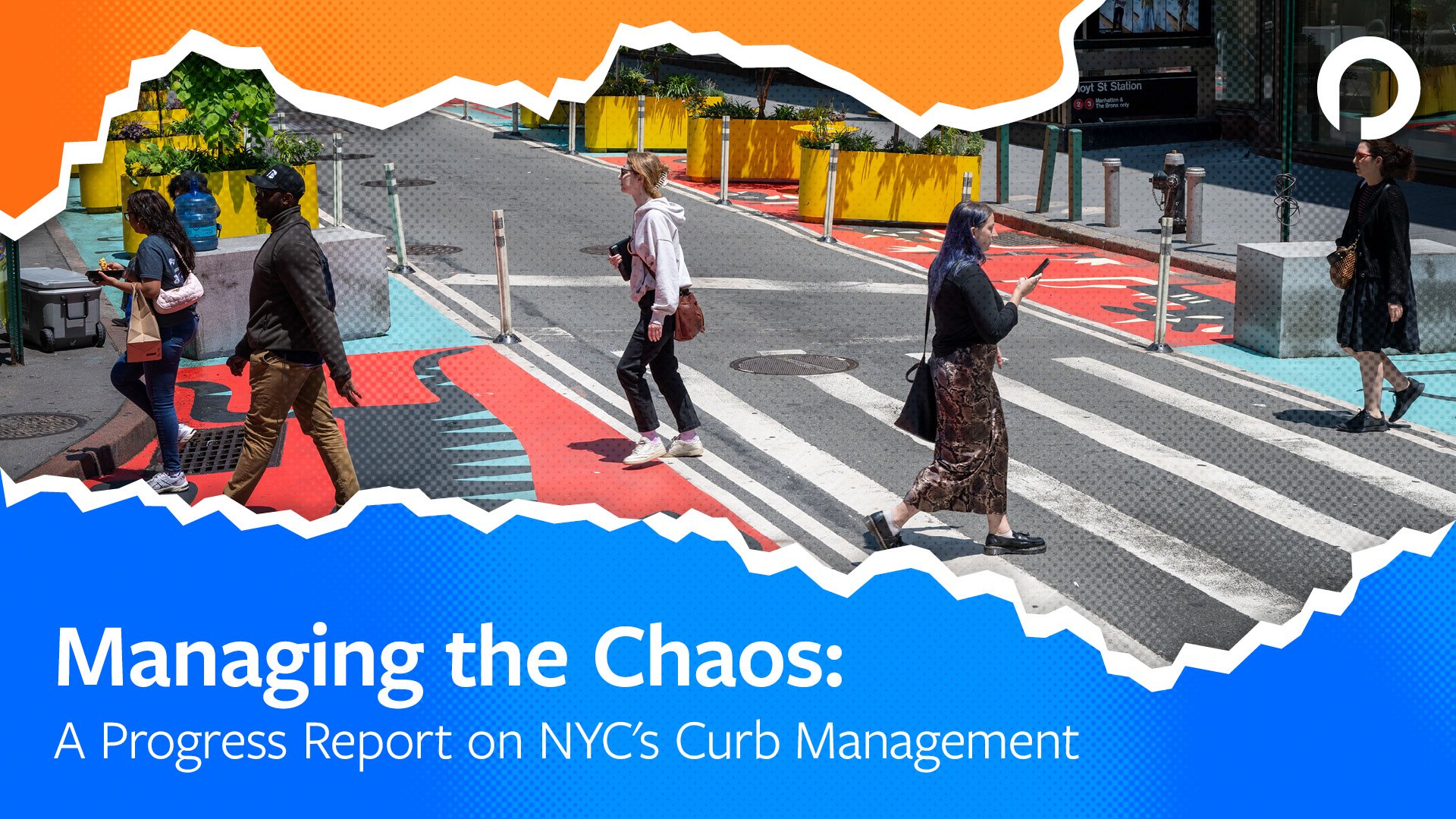
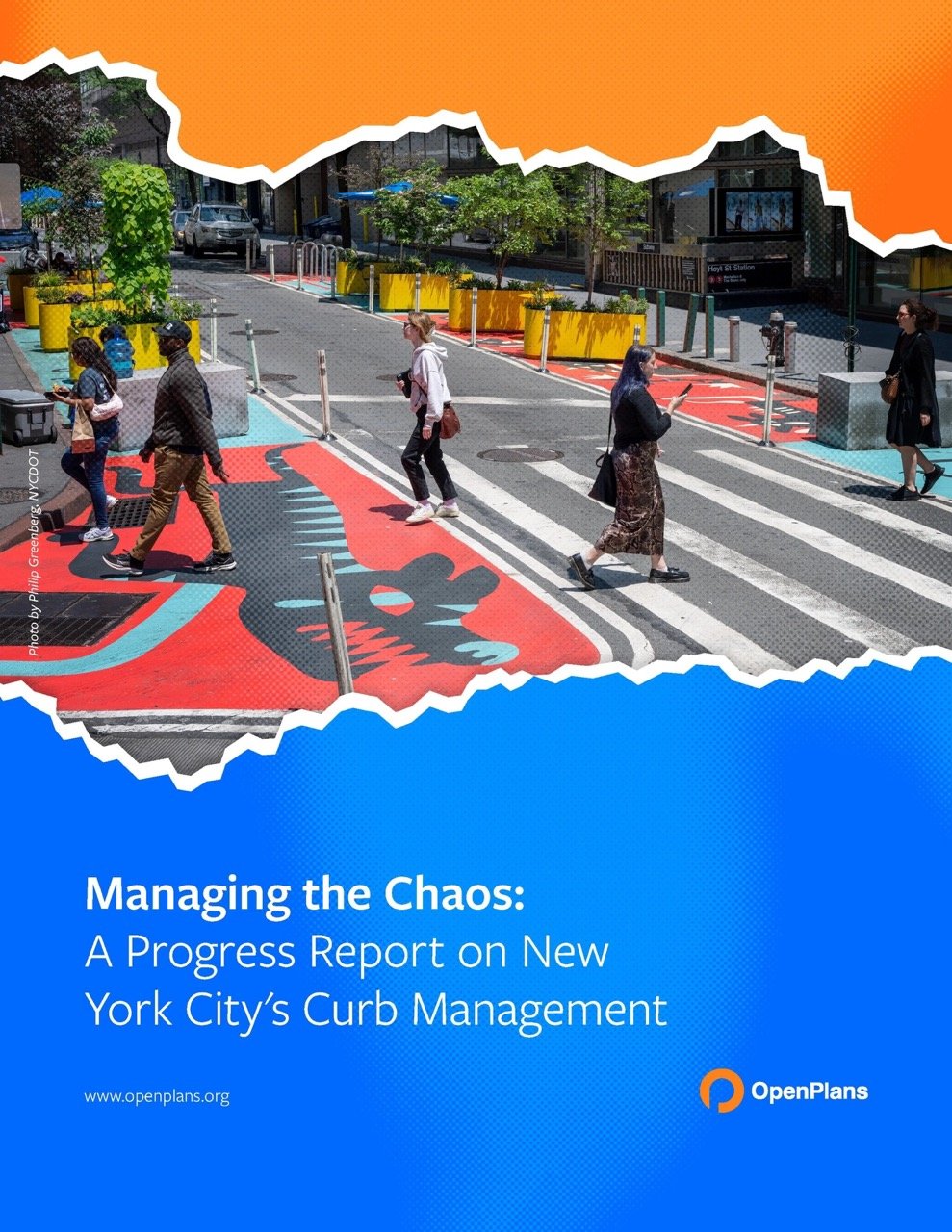
Since then, we followed it up with Managing the Chaos: A Progress Report on New York City’s Curb Management, looking at how far New York has come, and what work remains to be done.
The news is encouraging in places: thousands of new loading zones, thousands of new bike parking spots, and a first Smart Curbs pilot on the Upper West Side. But there’s still a long way to go. The City has yet to publish a curb hierarchy or a full curb management strategy, and when drivers pushed back on the Smart Curbs pilot’s paid parking changes, City Hall rolled them back.
Open Plans is advocating for a recommitment to improving our curb, and the city must act to improve our streets and communities. Here’s what we recommend:
Expand Smart Curbs to more neighborhoods, with the funding to match.
Give the City the ability to automatically enforce the curb, because a loading zone with a car parked in it is just another parking space.
Publish a full-scale curb management strategy
Keep expanding loading zones, microhubs, and secure and cargo bike parking.
Reinstate the paid parking changes and launch a dynamic pricing pilot, so there’s always a spot open and less circling.
Taking Action
Enforcement is the missing piece, and most new automated enforcement tools need approval from Albany. It’s time to curb the chaos. Send a letter to your City and State elected officials to support S8665/A5440 and Res. 141, which would give New York the tools to automatically enforce the rules of the curb.
Let's curb the chaos with automated enforcement
Send a letter to your City and State elected officials to support S8665/A5440 and Res.141.
TAKE ACTION
Curb the chaos with automated enforcement. Send a letter to your City and State elected officials to support S8665/A5440 and Res.141.
More on Curbside Management