Campaign
Lower Manhattan
Downtown is where our city got its start. Its narrow, winding streets predate the car by centuries, but have nonetheless been asked to accommodate perpetual gridlock and an excess of curbside parking. The situation for the neighborhood has been worsened by rampant placard parking use and abuse that has made it difficult to enforce existing rules and caused chaos for pedestrians and drivers alike.
This disorder on downtown streets has made the neighborhood difficult to navigate and led to a worsened environment for residents, workers, and tourists alike. It’s time to make a change.
With the right interventions, the cozy streets of downtown could be among the most beautiful in the world; the perfect blend between the historic charm of our origins and the vibrant, dynamic metropolis we’ve become
What's Not Working
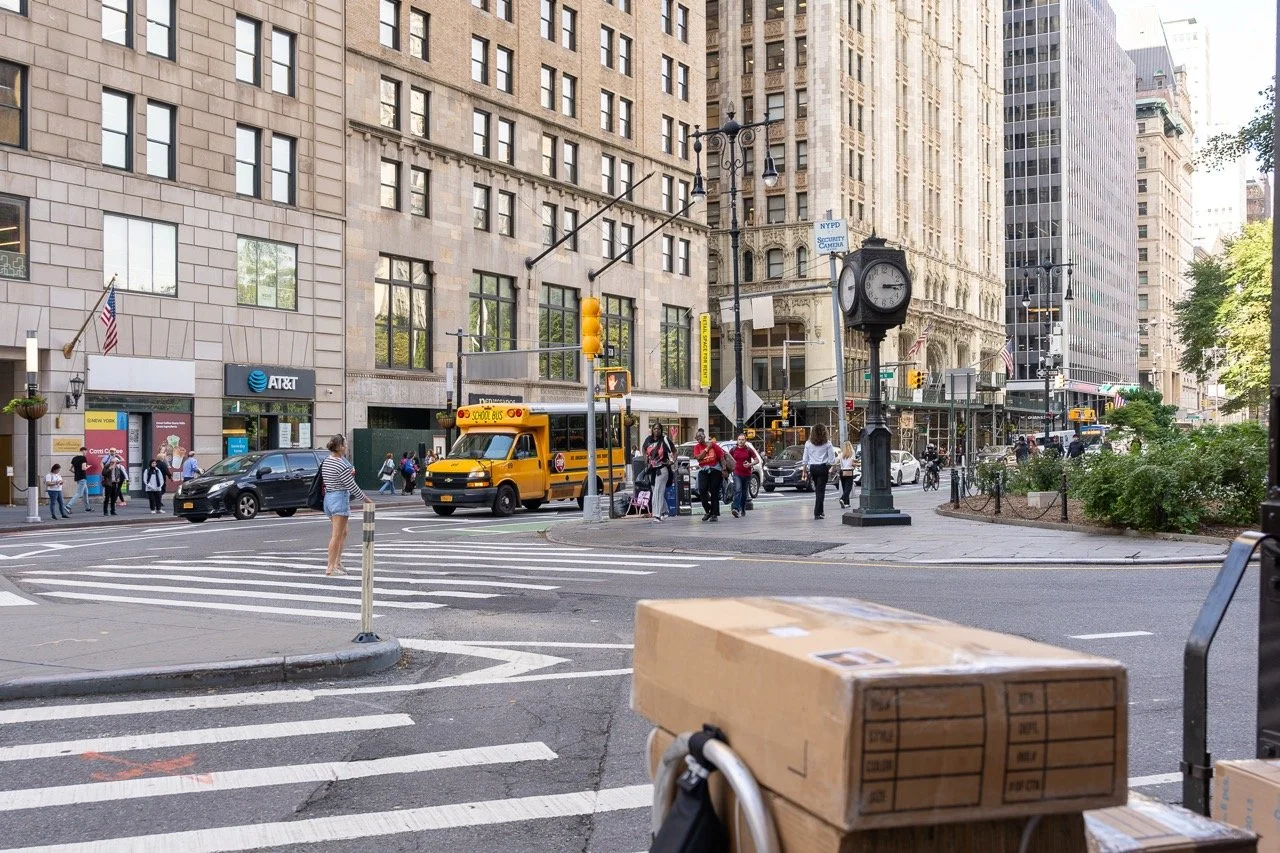
Downtown is crowded. Cars clog the roads, and pedestrians are forced by the thousands onto too-narrow sidewalks, which are often blocked by trash bags, illegally parked cars, and delivery vehicles that have nowhere else to go.
The result is a constant bustle with little sense of place. People on downtown’s streets are just passing through on their way home, to the office, or to the subway. This chaos has been the focus of community activism for decades, and as the neighborhood’s residential population grows, both the demands for change and the pressures on local streets have increased.
Downtown’s resident population has more than doubled from 2000 to 2024, and over 5,000 more homes have been permitted in the area.
Downtown has the highest retail vacancy rate in New York City, with 1 in 4 storefronts sitting empty.
Manhattan Community Board 1 passed a resolution calling on DOT to prioritize pedestrian mobility and safety, building on over 60 years of sustained advocacy.
Stay in the loop about our campaign to transform downtown.
Sign-up for our biweekly newsletter
Our Vision
With the right changes, we can transform downtown into something incredible. Imagine a downtown where the sidewalks are clear and spacious. With containerized trash so that garbage no longer blocks the way for those with strollers or in wheelchairs, with designated microhubs to give delivery trucks a place to park that doesn’t involve taking up a sidewalk or blocking a lane, and instead of parked cars taking up every inch of curb, there are more trees, street art, and more outdoor dining options.
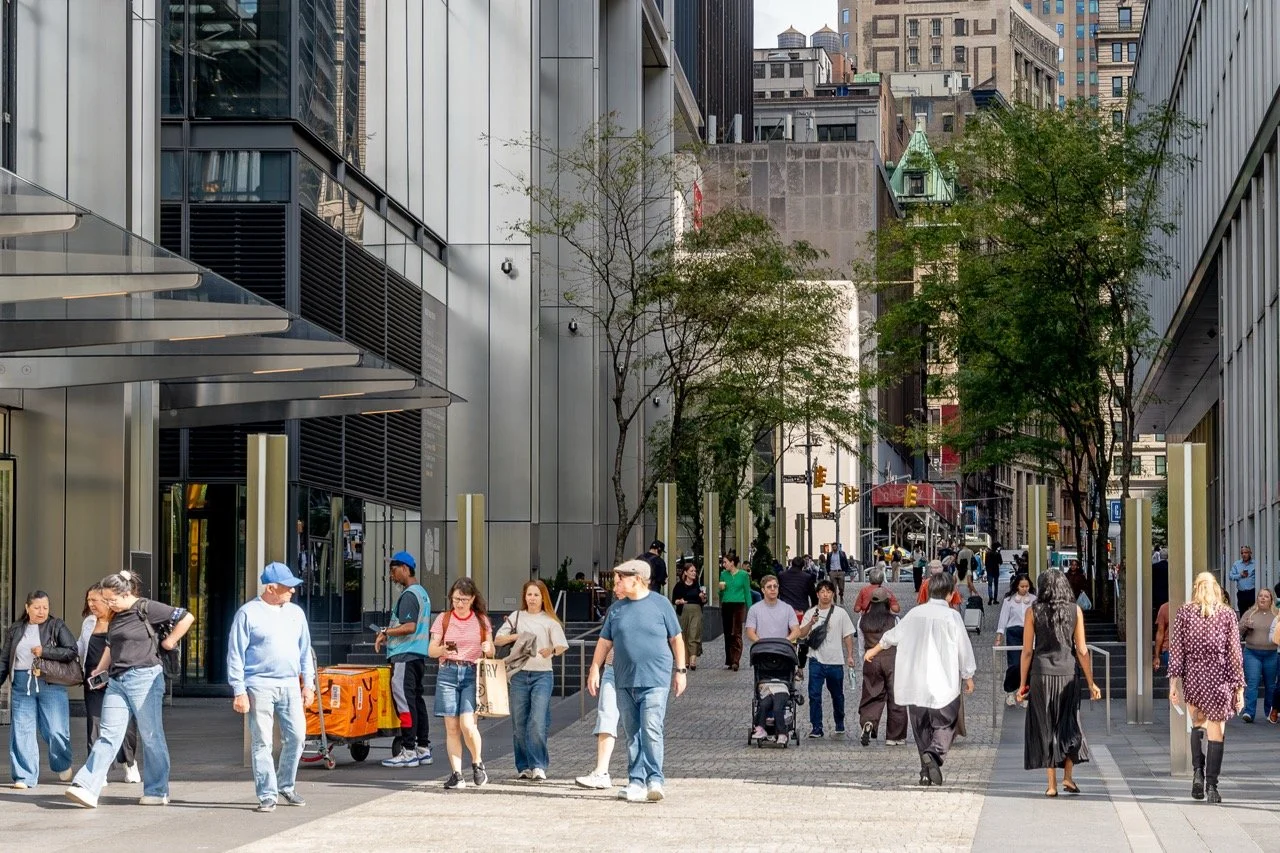
It’s a downtown that’s a place you want to be, where kids hang out freely and independently with their friends, where you can grab a coffee and sit for a while, where empty storefronts fill back up with businesses that a thriving neighborhood needs.
Our Vision lays out a straightforward path to making this vision a reality, starting with these key priorities:
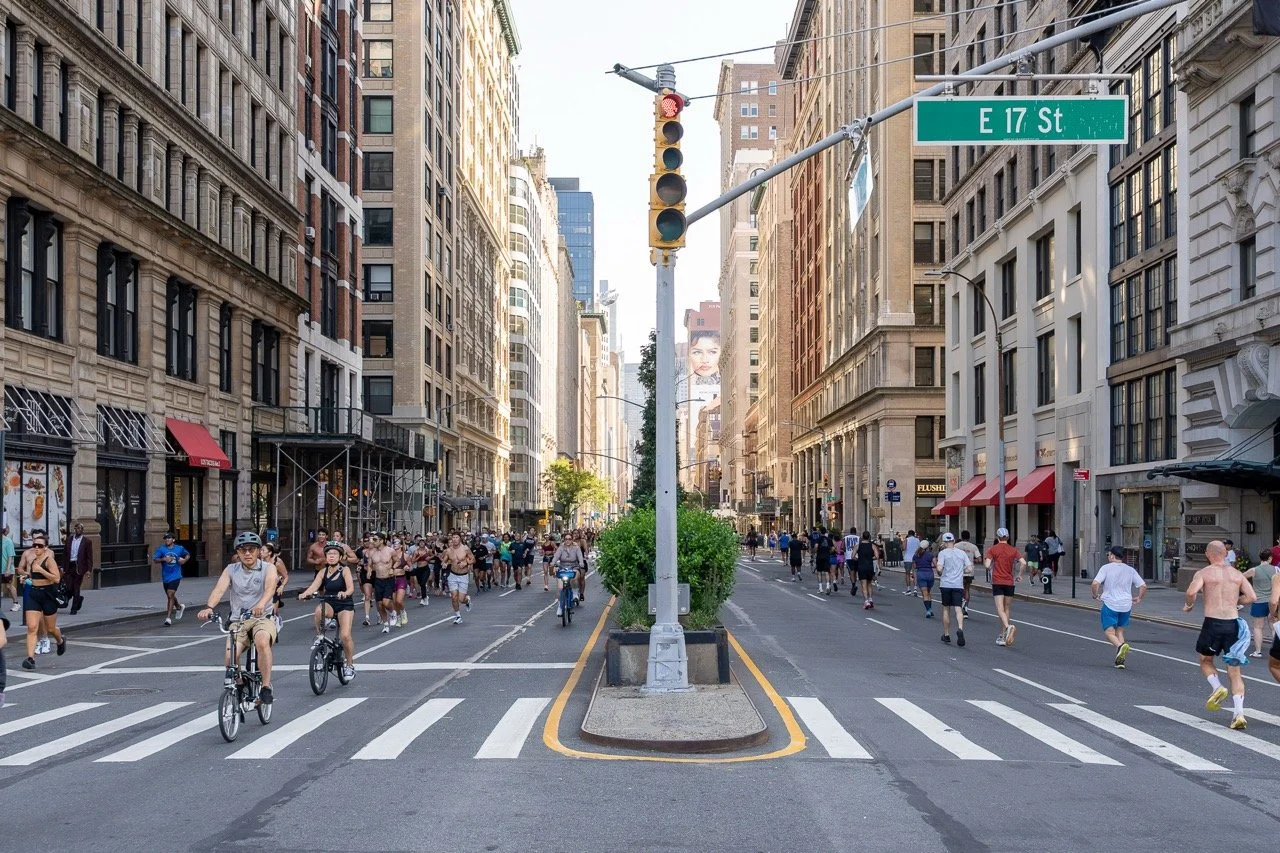
Give people more room to walk, with pedestrian streets, plazas, School Streets and wider sidewalks, making downtown a place people stay and enjoy, not just pass through.
Make streets safer by reducing conflicts between people and vehicles and making them easier to cross.
Make downtown easier to get around for everyone, so a wheelchair user, a parent with a stroller or a kid walking to school can walk, roll or bike with confidence.
Reduce through-traffic and idling trucks to clean the air and lower downtown's carbon emissions.
Bring trees, plantings, seating and art to downtown's streets to make them cooler, greener and more inviting.
Create streets that bring people back to downtown's storefronts and help the neighborhood thrive economically.
How We Get There
Reimagine the streets. Downtown's streets can be redesigned for the people who use them the most. That means closing streets to cars when they’re busiest with people, School Streets at drop-off and pick-up, new plazas, and pilots that let people experience the change before it becomes permanent.
Manage the streets. Streets designed for people make deliveries, trash pickup, and emergency response more efficient, not less. That means a district freight plan with delivery hubs, a district waste plan that gets trash into containers, and a curb managed for the uses that matter most.
Enforce the streets. Placard abuse and illegal parking undercut downtown’s ability to thrive as a neighborhood. Physical design is the most reliable fix, because a curb with a bin, a bench, or a plant on it cannot be parked on. Where design alone isn’t enough, consistent enforcement, including automated enforcement, keeps the street working as intended.
Our full plan is coming soon!
If you’re interested in transforming downtown’s streets and want to get involved, please reach out to jackie@openplans.org.
TAKE ACTION
Stay in the loop about our campaign to transform downtown.