
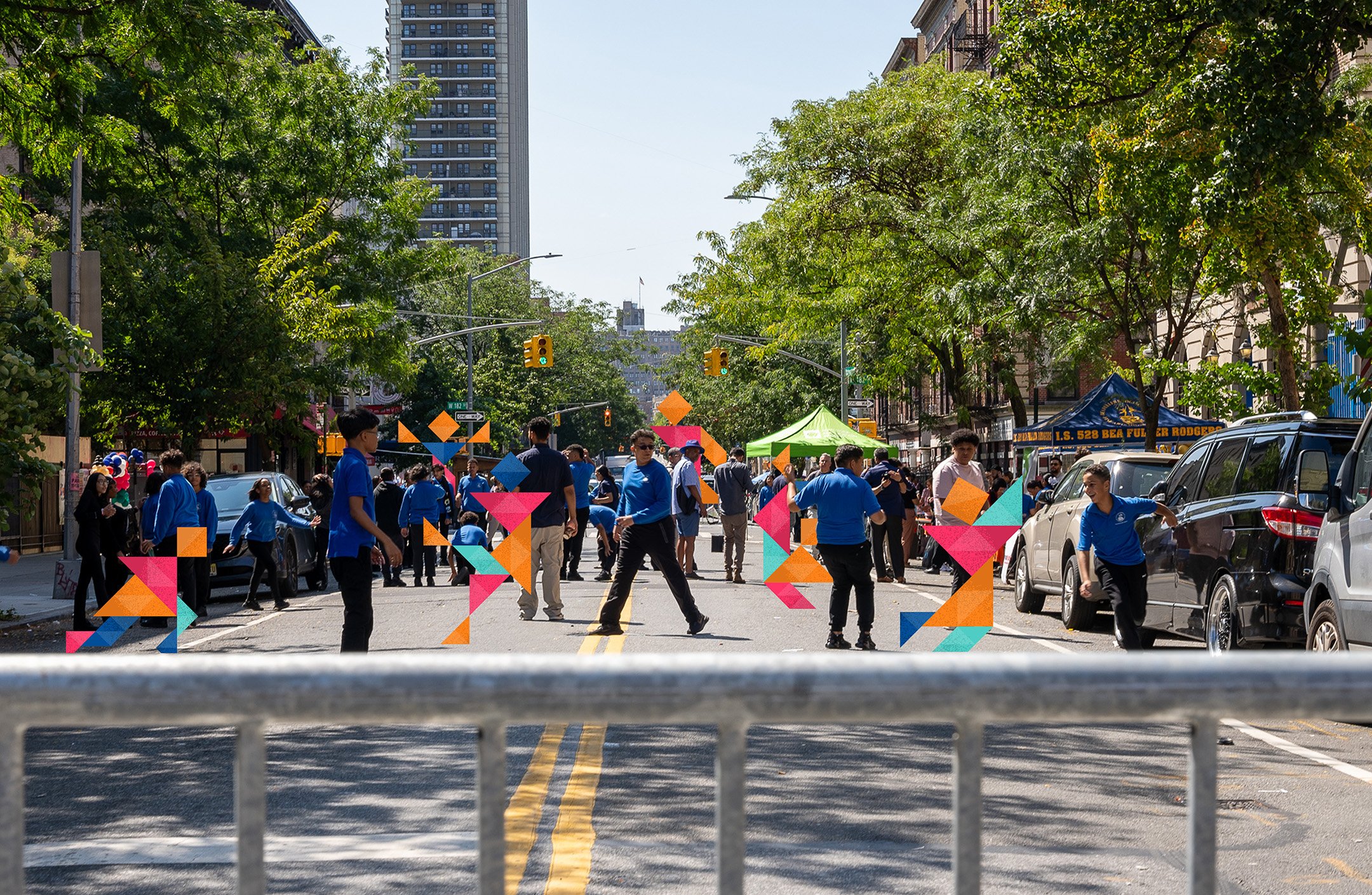
School Streets for All in NYC
School Streets are an essential part of a thriving city for children and families. They create safer conditions for arrival and dismissal, and provide much-needed space for play, learning, and community use—especially for schools with limited space.
In New York City, School Streets are the exception rather than the norm. Our streets revolve around traffic instead of people. It doesn’t have to be this way. Cities around the world are making School Streets permanent, redesigning blocks in front of schools with pedestrianization, greenery, seating, and play infrastructure that benefit entire communities. New York City has taken important early steps, but the current program is limited in scale and places significant responsibility on individual schools to manage closures, coordination, and operations. This report outlines a framework for a stronger, more equitable School Streets program—one that clarifies agency roles, invests in staffing and infrastructure, and removes administrative barriers so that streets near schools can function as safe, everyday public space for students and their communities.
Why Invest in School Streets?
School Streets create safer conditions for families to travel to and from school, and provide kids with safe outdoor space for recess and PE.
School Streets create vital public space in neighborhoods that often lack parks, plazas, and safe places for children to gather.
School Streets support physical and mental health by encouraging walking, play, and social connection while reducing air and noise pollution.
Recommendations
-
Simplifying and standardizing the application will lower barriers for schools—particularly those in under-resourced communities—and ensure equitable access citywide.
-
Creating a dedicated “School Streets” line item in the Mayor’s 2026 budget will provide the stability needed to move from piecemeal projects to permanent, citywide implementation.
-
Permanently pedestrianized streets and plazas in front of schools will dramatically improve safety, reduce operational challenges for schools, and create valuable community space that can be shared beyond school hours.
-
A successful School Streets program requires defined roles and accountability. Formal collaboration between the Department of Transportation and the Department of Education will ensure consistent oversight, maintenance, and long-term planning.
-
Additional staffing and resources are necessary to manage School Streets at scale and reduce over-reliance on nonprofit partners to operate an expansive program.
-
Strategies such as relocating teacher parking, creating placard buyouts, and rethinking curb use can resolve conflicts while prioritizing student safety.