

REPORT
How Would For-Hire Autonomous Vehicles Impact NYC?
Autonomous for-hire vehicles, better known as robotaxis, are operational in cities across the globe. In New York City, Waymo received a permit to test their vehicles with a safety driver, which expired in March 2026. Robotaxi companies have spent millions of dollars in New York City and State lobbying for the legalization of robotaxis.
However, a core question remains unanswered: how might robotaxis impact our streetscape in comparison to the professional for-hire vehicle drivers of taxis, Ubers, and Lyfts? In this report, we explore this question through the lenses of safety, vehicle miles traveled, and parking.
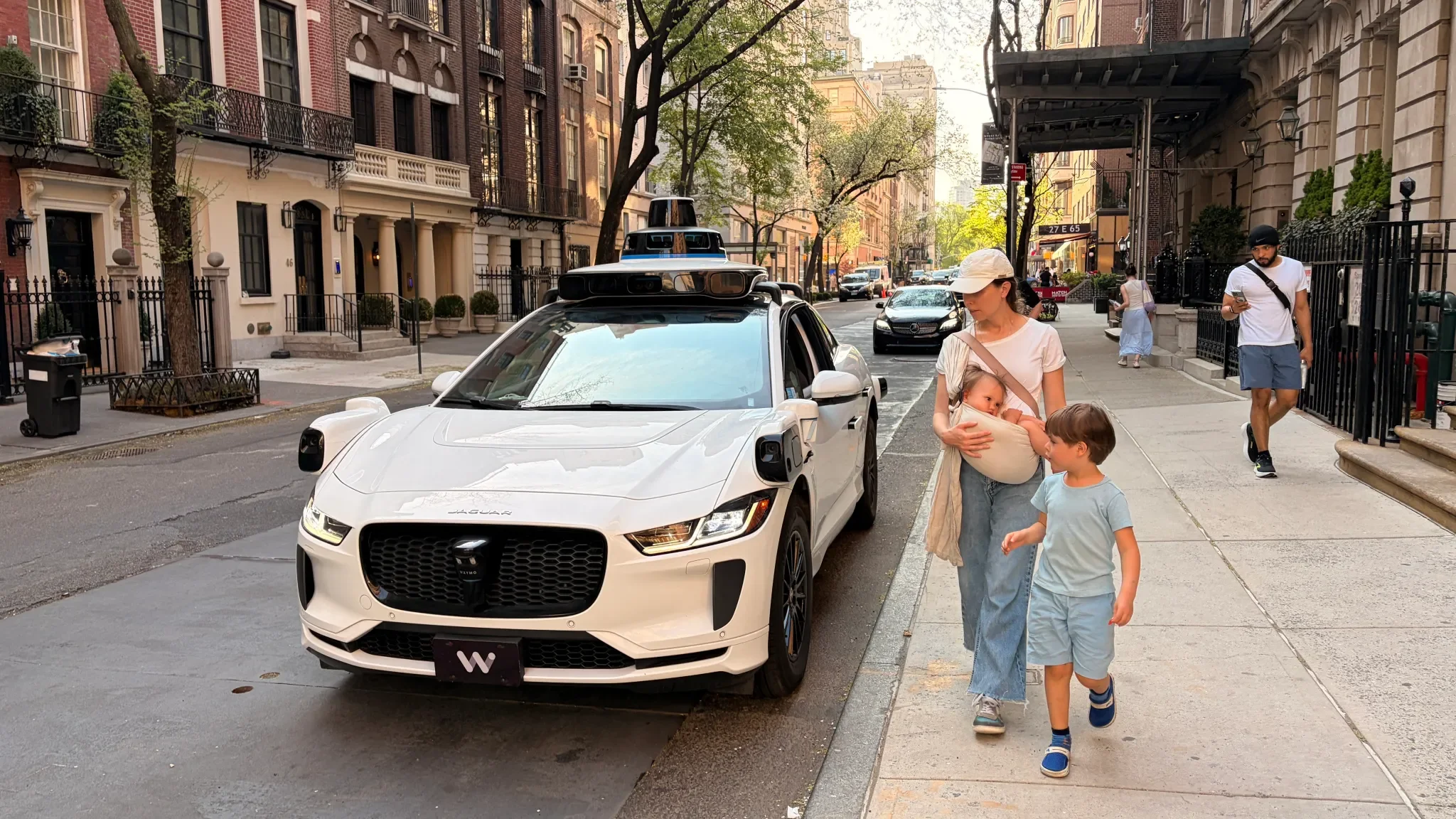
A Waymo on display outside an autonomous vehicle conference in NYC. Photo by Sophia Lebowitz courtesy of Streetsblog
Key Takeaways
As it stands, replacing a high-volume for-hire vehicle in New York City with a robotaxi would increase vehicle miles traveled and congestion.
New York City’s constrained parking availability would likely dramatically increase Waymo’s miles driven empty if deployed in the city, leading to more traffic and wear on the streets.
Waymo’s preliminary safety record is encouraging, though more miles in more conditions must be driven to constitute a sufficient sample and draw definitive conclusions — and safety comparisons must be made to human for-hire vehicle drivers, which are safer than everyday drivers.
Policy Recommendations
Require robotaxi companies to compare their safety data to professional, for-hire vehicle drivers as a prerequisite to licensure to operate
Require data transparency from robotaxi companies in order to conduct critical analyses
Evaluate fees to adequately capture and reduce the impact of robotaxis on our streets
Stop centering single-use vehicles and consider how automated public transit can fill holes in our transit system
Consider limiting robotaxis’ ability to travel within dense, transit-rich commercial areas
Expand for-hire vehicle pick-up/drop-off zones
Manage licensing and control deployment to prevent excessive robotaxi vehicle miles traveled growth
About the Sam Schwartz Transportation Research Program at Roosevelt House Public Policy Institute
Launched in September 2025, the Sam Schwartz Transportation Research Program (SSTRP) at Roosevelt House at Hunter College is dedicated to advancing solutions for urban mobility and improving New York City’s transportation systems.

About Open Plans
Open Plans’ mission is to transform how people experience New York City’s streets. Open Plans uses deep research, grassroots advocacy and policy change to reduce driving, reclaim space for people, and build connected neighborhoods. We promote a people-first street culture that prioritizes community, joy, and sustainable mobility.
This is a critical moment for New York City’s streets.
Sign up to our newsletter to stay informed as the autonomous vehicle debate unfolds.