Reducing Driving
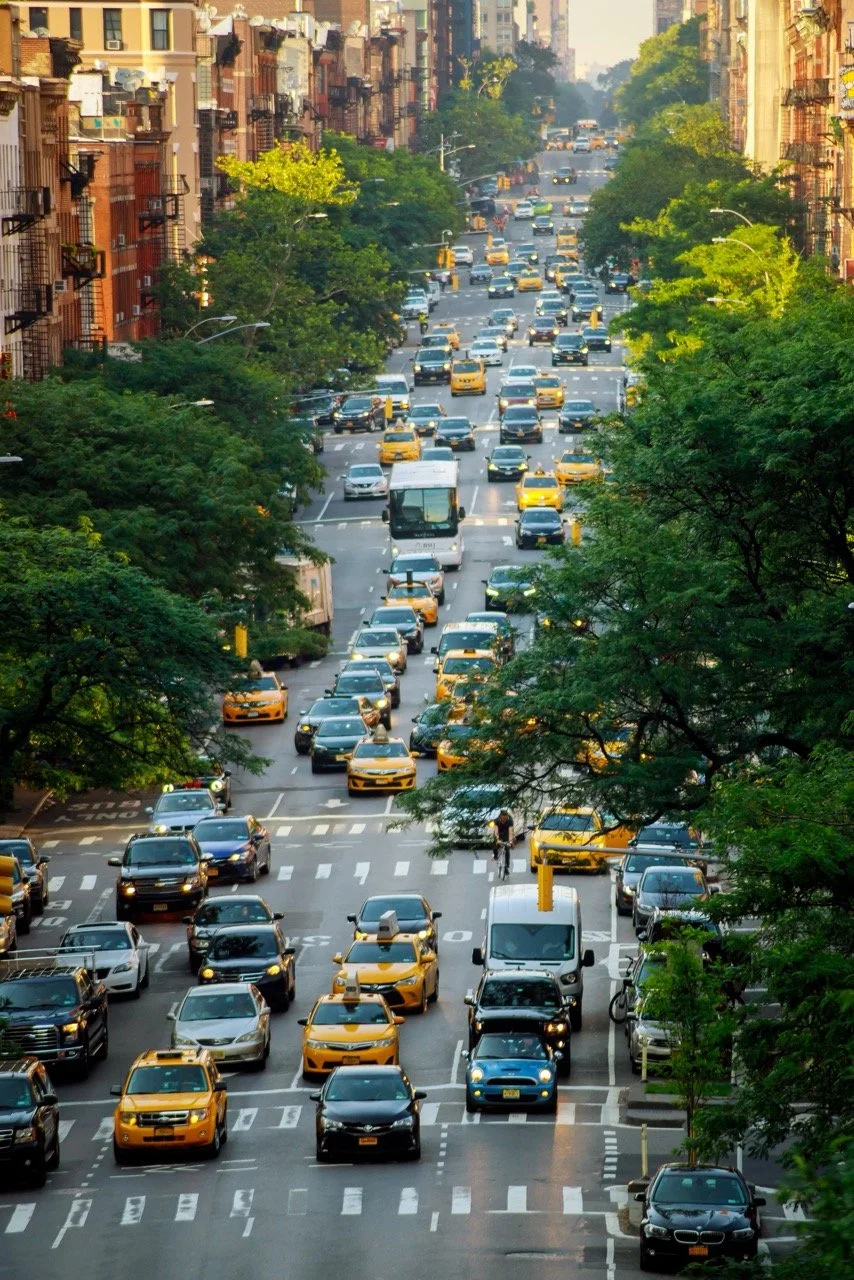
We’re calling on the city to set a goal to reduce Vehicle Miles Traveled (VMT) by 40% by 2035.
To understand and measure how much we’re driving and ultimately track progress on reducing driving, governments around the world use Vehicle Miles Traveled (VMT).
Reducing VMT is one of the most important steps to creating a better, more connected and more livable New York. It’s the key to creating a city in which the individual, not the car, is centered on our streets and other public spaces.
That’s why we’re calling on the city to set a goal to reduce VMT by 40% by 2035.
Creating a greener, cleaner, quieter, and more vibrant city that moves past the failures of car-centric planning requires us to reduce the amount of driving in New York. This makes measuring and reducing VMT the key to improving the city’s public realm.
Stay in the loop about our campaign to reduce driving in New York City
Sign up for our biweekly newsletter.
Understanding VMT: One Metric to Rule Them All
Vehicle miles traveled, or VMT, is a measure of the total sum of miles traveled by every vehicle in an area during a specified period of time.
The number of cars on the road, how frequently people drive, and how far they go when they do all factor into the total: VMT is the best metric for understanding changes in driving behavior and the associated impacts on traffic, safety, mobility, and quality of life.
According to data from the Mayor's Office of Climate and Environmental Justice, VMT increased by 17% from 2005 to 2024
With our city’s streets unable to get any wider, this VMT increase has quickly become responsible for many of New York City’s transportation headaches.
It’s why we need to set direct, measurable goals for reduction and take steps to achieve them.
Congestion, air pollution, greenhouse gas emissions, slow buses, potholed roads, deadly crashes, incessant honking, speeding on neighborhood streets, and much more all stem from the continued rise in VMT. It’s not a sustainable trend.
As advocates for safer streets, better public transit, sustainability, livable cities, and multimodal infrastructure, setting a goal to reduce VMT is our top priority.
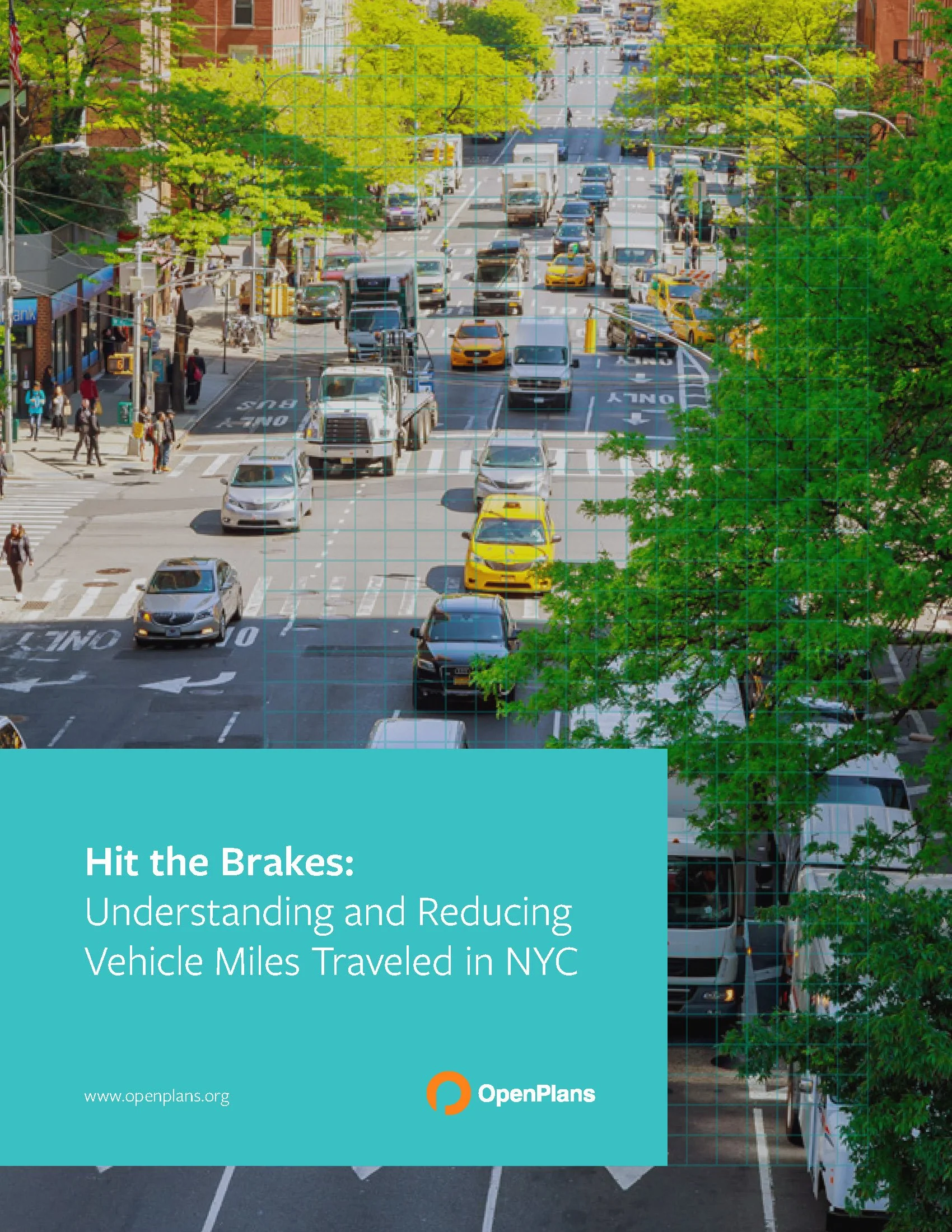
In October 2025, we released, “Hit the Brakes,” a report that urges NYC to set a citywide goal to reduce driving, invest in tools for measuring VMT, reconsider policies that increase driving, and adopt proven strategies that reduce optional driving.
VMT’s Impact on NYC
While cars and trucks serve a purpose in facilitating the movement of goods and people, an overreliance on cars has a destructive impact on the fabric of our city. It makes VMT critical to understanding how our city functions, how it moves, and how all of us interact with the public realm.
Policies that foster additional use of private vehicles in urban environments, like highway expansions and free parking, cost the public more in the long run. With a VMT reduction goal in place, these policies would need to be critically evaluated to avoid increasing the amount of traffic on our roads.
Here’s how our current, high-VMT status quo impacts New Yorkers:
-
More driving means more crashes, causing injuries and death for drivers, pedestrians, and cyclists alike.
More driving produces more air pollution, which leads to higher rates of asthma and other conditions in vulnerable communities.
In 2024, there were 253 traffic fatalities in NYC. New York City also has the highest childhood asthma rates in the nation.
-
More driving slows down buses; the average speed of a bus in NYC is just 8 mph. Despite this, they move 10x more people in NYC than cars do.
More driving means slower commutes for transit users and drivers alike, and lost time means lost income and a lower quality of life.
-
More driving creates more honking, idling, and the incessant din of traffic. Noise pollution is linked with worse health, including disrupted sleep and worsened mental health.
-
More driving increases our carbon footprint, increases local emissions, and prevents the city from reaching its climate goals.
According to our analysis, meeting the goal of a 40% VMT reduction would reduce the city’s overall emissions by 80%.
-
More driving means more New Yorkers are being pushed to spend money on cars, the largest household expense after housing. The average new car now costs $12,000 per year in all-in costs; the subway costs under $2000 a year.
Low-income households spend 30% of their budget on transportation alone, a figure made worse by reliance on cars.
Highways are more expensive per trip to build and maintain than public transit, meaning higher public spending and higher taxes for New Yorkers.
-
More driving means clogged roads, slowing down travel for everyone, creating gridlock and making it difficult for emergency services to respond to 911 calls.
More driving means more cars using local, neighborhood streets as cut-throughs, making our communities less vibrant and pleasant.
65% of all neighborhood traffic is cutting through local streets.
Why We Need Reduction Targets
How we reduce VMT is a complicated question with many different answers. Congestion pricing, low-traffic neighborhoods, Low Emission Zones, and other interventions are all important tools; there is no single panacea.
As it currently stands, improvements to non-car infrastructure are having an impact on mode share, but it’s being offset by the parallel surge in driving. A mode-shift goal alone is not enough.
Setting a goal to reduce VMT by 40% by 2035 would force us to make serious choices that preserve access for goods and critical travel while making transit and other forms of mobility the best option for more people.
With no simple solution, the VMT reduction target becomes a framework for evaluating each project and how they interact with one another.
It’s a complete reimagining of how we tackle transportation issues, one that recognizes the fundamental incompatibility of excess driving with the dense, vibrant fabric of New York City.
To start this work, the city must begin to properly measure VMT and set concrete goals for reducing it by 40% by 2035.